
2026-10-13 · David Muncie
Why Muncie Furnaces Fail During January Cold Snaps
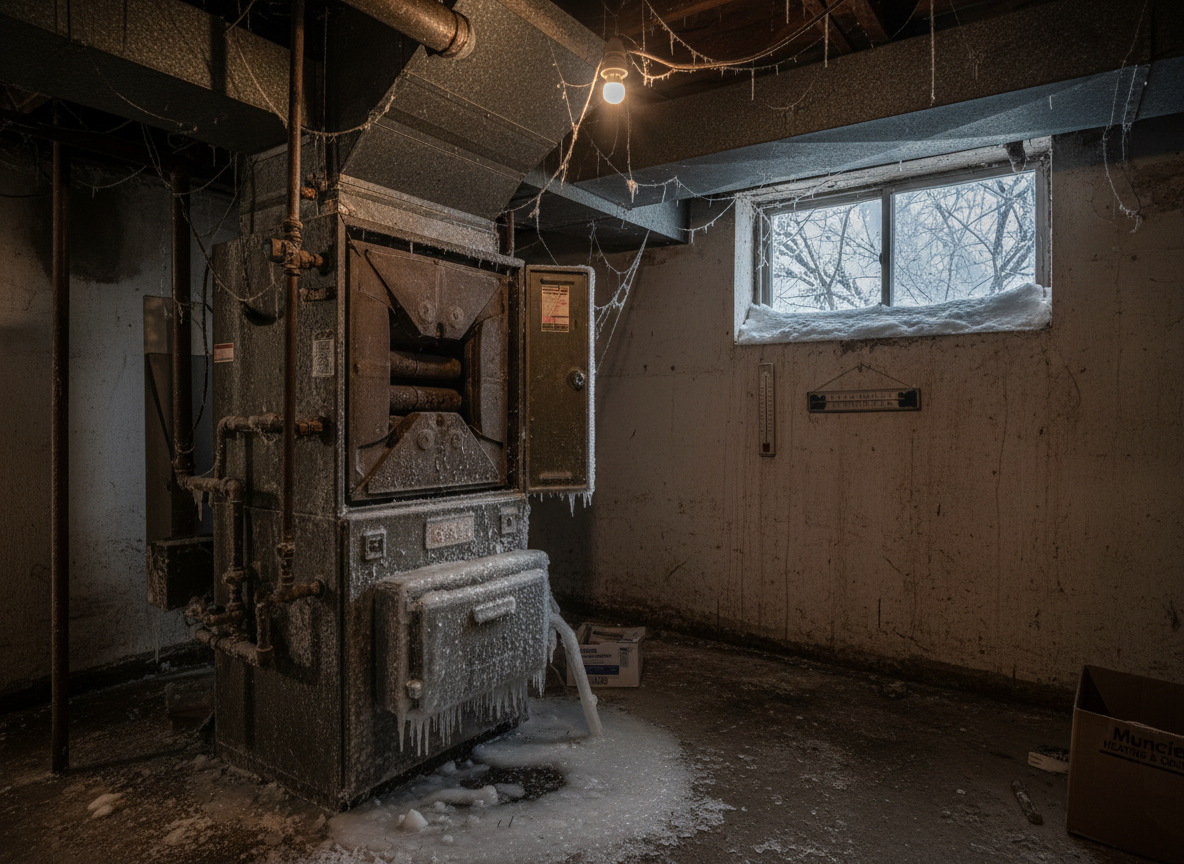
January is consistently Muncie's coldest month, with average daily temperatures often dipping into the low 20s and high teens, and overnight lows frequently plummeting below zero. This sustained cold spell is precisely why furnaces in homes across Riverside, Westside, and East Central neighborhoods are most prone to failure. The primary reasons boil down to prolonged, heavy usage, exacerbating existing minor issues, and the stress of rapid temperature fluctuations. Furnaces that have accumulated wear and tear over years of service, particularly those 10–15 years old, are especially vulnerable during these intense cold snaps, as components like heat exchangers, ignitors, and blower motors are forced to work overtime without respite. This continuous demand often pushes already weakened parts past their breaking point, leading to sudden and inconvenient breakdowns when you need heat the most.
The Impact of Continuous Operation on Furnace Components
During Muncie's January cold snaps, your furnace runs almost constantly to maintain comfortable indoor temperatures, especially in older homes common around Ball State University and Minnetrista. This relentless operation places immense strain on several critical components. The blower motor, responsible for circulating heated air throughout your home, can overheat or wear out faster due to prolonged use. Similarly, the heat exchanger, which transfers heat from the combustion chamber to the air, undergoes continuous expansion and contraction, increasing the risk of cracks—a serious safety concern. The ignitor or flame sensor, vital for safe and efficient ignition, can also fail prematurely from constant cycling. Many homes in Delaware County, particularly those built before the 1980s, often have furnaces that are already operating less efficiently, making them more susceptible to these stress-induced failures. Regular maintenance prior to winter, such as a furnace tune-up, can often identify and address these impending issues.
Neglected Maintenance and Filter Issues
One of the most common, yet easily preventable, causes of January furnace failures in Muncie is neglected maintenance, especially regarding air filters. A clogged air filter restricts airflow, forcing the furnace to work harder to pull air through, which in turn leads to overheating and increased energy consumption. This added stress can cause components like the blower motor to fail or the limit switch to trip repeatedly, shutting down the system to prevent damage. In the humid continental climate of Muncie, dust, pet dander, and other airborne particles can accumulate rapidly in filters, especially in homes near busy areas or those with older insulation. We often see furnaces in areas like Downtown Muncie and the Old West End struggling due to filters that haven't been changed in months. For optimal performance and to prevent breakdowns during the coldest parts of winter, we recommend checking your furnace filter monthly and replacing it every 1–3 months, or more frequently if you have pets or allergies. For more information on preventing these issues, consider reading our article on Furnace Air Filter Problems.
Thermostat Malfunctions and Electrical Problems
While often overlooked, a malfunctioning thermostat can be a direct cause of furnace failure during Muncie's January freezes. If your thermostat isn't accurately reading the room temperature or is sending incorrect signals to the furnace, it can cause the system to short cycle (turn on and off too frequently) or run continuously without reaching the set temperature. This erratic operation puts undue stress on the entire system. Furthermore, electrical issues, such as a tripped circuit breaker, loose wiring, or a faulty control board, can prevent the furnace from starting or operating correctly. The sudden demand for heating during extreme cold can sometimes expose weaknesses in an older electrical system. For homeowners in areas like Westside or East Central, where some housing stock dates back decades, these electrical vulnerabilities are more common. If your furnace isn't responding to thermostat adjustments, or if it's completely dead, checking your circuit breaker is a good first step, but more complex electrical issues will require a professional diagnosis. You can learn more about troubleshooting these issues in our blog post, How to Replace a Furnace Thermostat in Muncie Homes.
Age and Wear-and-Tear of Older Units
Furnaces, like any mechanical system, have a finite lifespan, typically ranging from 15 to 20 years. Many homes in Muncie, particularly around the Muncie Children's Museum and the older sections of Riverside, are equipped with furnaces that are nearing or have exceeded this age. As a furnace ages, its components naturally wear out, becoming less efficient and more prone to failure. During the intense cold of January, these older units are pushed beyond their limits. Common age-related failures include a cracked heat exchanger, a worn-out blower motor, or a failing gas valve. While regular maintenance can extend the life of a furnace, there comes a point where repairs become more frequent and costly than replacing the unit. When a furnace repeatedly breaks down in the dead of winter, especially if it's over 15 years old, it's often a sign that a Furnace Replacement is a more cost-effective and reliable solution in the long run, ensuring consistent warmth through future Muncie winters.
Carbon Monoxide and Safety Concerns
While not a direct cause of furnace failure, the risk of carbon monoxide (CO) leaks significantly increases when furnaces are overworked or improperly maintained during cold snaps. A cracked heat exchanger, often a result of age and continuous stress, can allow CO—a colorless, odorless, and deadly gas—to escape into your home. This is particularly dangerous during January when windows are sealed tight, preventing ventilation. Furnaces in Delaware County, especially those that haven't had a recent professional inspection, are at higher risk. Symptoms of CO poisoning can mimic the flu, making it difficult to detect without a CO detector. If your furnace is making strange noises, emitting unusual odors, or if you experience dizziness or nausea, evacuate immediately and call for emergency service. Ensuring your furnace's heat exchanger is inspected regularly is crucial for the safety of your family. Always have working carbon monoxide detectors on every level of your home, especially during the colder months when furnace usage is at its peak.